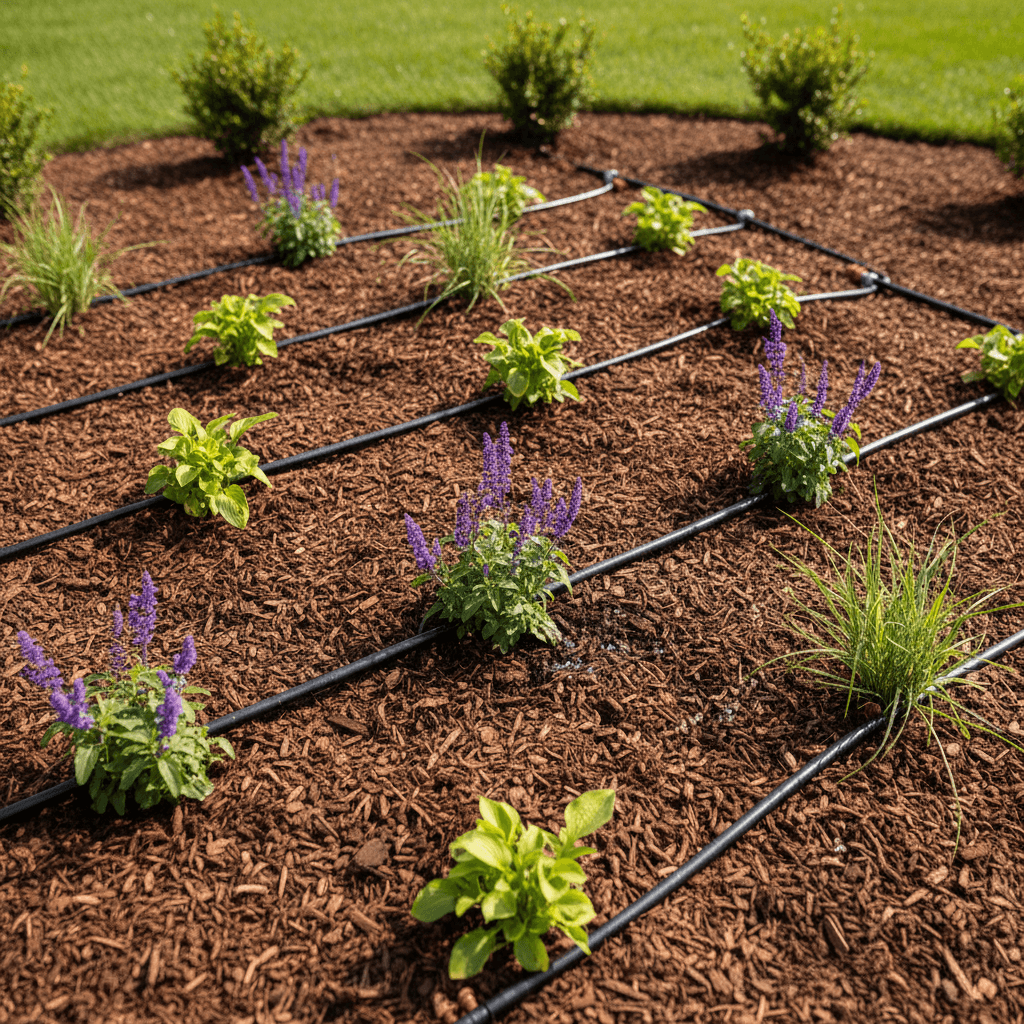

A looped irrigation main line delivers steadier water pressure than a single run because each point is fed from two directions, which reduces friction loss. Single runs cost less on simple layouts, but loops stabilize flow across larger distances so even the furthest emitters perform well.
Inconsistent pressure and patchy dry spots often trace back to one overlooked detail: the shape of your irrigation main line. Poor designs starve the furthest zones while the pump works overtime against friction loss. The choice between a single run and a loop is one of the most important decisions in any irrigation layout. This guide explains the hydraulic advantages of looped systems and how they align with Florida building codes, so you can plan for uniform coverage and long term reliability.
Understanding Irrigation Main Line Geometry
The irrigation main line is the central artery of any system, carrying pressurized water from the source to each zone valve. It stays under constant pressure, and its efficiency depends entirely on the layout.
There are two configurations: the single run (radial design) and the looped (ring design). A single run moves water in one direction and ends at the furthest valve. It is standard for DIY and simple residential jobs, but larger projects often call for more sophisticated engineering.
A looped irrigation main line vs single run comparison shows the loop, which connects back to itself, balances pressure across the whole property.
What is a Single Run Irrigation Main Line?
A single run main line, also called a radial or dead end design, sends water one direction to the final valve. It is simple to install and uses less pipe, which lowers upfront cost on smaller residential properties.
The downside shows up when you calculate friction loss. As water moves through pipe, it loses energy against the pipe walls. A single run forces the full flow down one path, so those losses add up and the furthest valves can fall below the pressure sprinklers need.
That creates pressure variation across the system: high pressure near the source causes misting and wear, while low pressure at the end ruins coverage. For professional projects where uniformity matters, the real question is whether a single run can hold enough pressure at the most demanding point without oversizing the pipe to compensate.
The Benefits of a Looped Irrigation Main Line
A looped main is a continuous circuit, so water reaches any valve from two directions at once. Think of one lane versus two: a single corridor creates bottlenecks, while two lanes move the same volume more smoothly.
This two path approach roughly halves flow velocity in any pipe segment, which matters for preventing water hammer, a damaging pressure surge that can burst pipes. Lower velocity also extends the life of the whole system.
For designers, the key win is pressure equalization. Instead of a steep drop at the end of a radial line, a loop keeps a distant valve near the same pressure as one by the source. That consistency makes loops the gold standard for large commercial and luxury residential projects. Because flow splits between two paths, you can often use smaller pipe for the same output.
Looped Irrigation Main Line vs Single Run: A Comparison of Pressure Loss
A common misconception is that a loop raises static pressure. It does not create pressure; it conserves it by cutting friction loss. In a single run, the whole zone volume travels one path. In a loop, it splits, roughly halving flow in each pipe section.
Because friction loss grows with flow velocity, halving the flow cuts pressure drop to roughly a quarter of a single run in the same pipe. That efficiency is often the cheapest way to keep performance without upgrading to larger pipe.
Precise hydraulic software calculates pressure losses to the tenth of a PSI, accounting for elevation, pipe material, and flow needs. This is the most reliable way to confirm that every head receives the pressure it requires.
Maintenance and Reliability Considerations
A good layout also reduces mechanical stress. The lower velocities in a loop cut surge damage at fittings and joints, extending the life of the underground pipe. Keeping flow moving during normal operation also avoids sediment buildup in the ring.
The biggest operational win is strategic isolation. With valves at key points along the circuit, you can bypass a damaged section without shutting down the whole system. A single run is far more vulnerable: one break near the connection disables every downstream zone. Isolation points built into the initial layout make maintenance a targeted task instead of a full shutdown.
Choosing between a looped main line and a single run comes down to property size and pressure needs. Loops deliver superior balance across large areas; a single run can suffice on simpler landscapes. Getting these calculations right is key to a healthy lawn and efficient water use.