Drip irrigation is generally superior to spray for flower beds because it delivers water directly to the root zone, reducing water waste by up to 50 percent. When comparing drip irrigation vs spray for flower beds, drip systems are more effective at preventing fungal diseases and soil erosion by keeping foliage dry and delivering moisture slowly.
Maintaining a vibrant landscape means working against intense heat and porous sandy soil. If certain flower beds keep looking dry or diseased despite regular watering, inefficient delivery is usually the cause. Traditional spray heads often lose moisture to evaporation and wind drift before it reaches the roots, hurting both plant health and your water bill. In this guide we break down how drip and spray compare on efficiency, maintenance, and Florida code compliance.
Understanding the Mechanics: Drip Irrigation vs Spray Systems
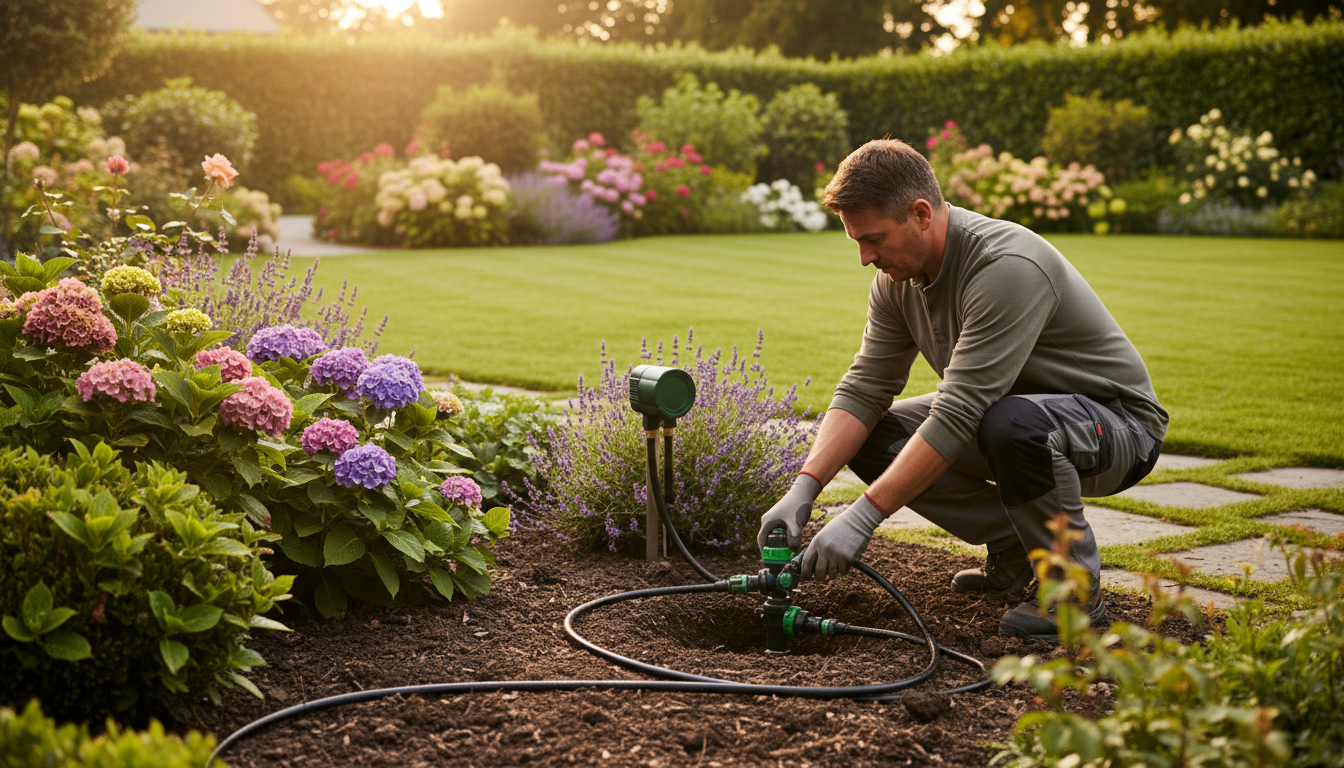
Choosing the right method comes down to how water moves from the source to the root zone. In Florida, where heat and wind are constant, the difference between spray and drip is about hydraulics, not just preference.
Spray systems use pop up spray heads to broadcast water through the air across a set radius, measured in gallons per minute (GPM). Because they throw water into the air, they are prone to wind drift and evaporation, especially on the coast. Their goal is head to head coverage, delivering uniform precipitation across a bed.
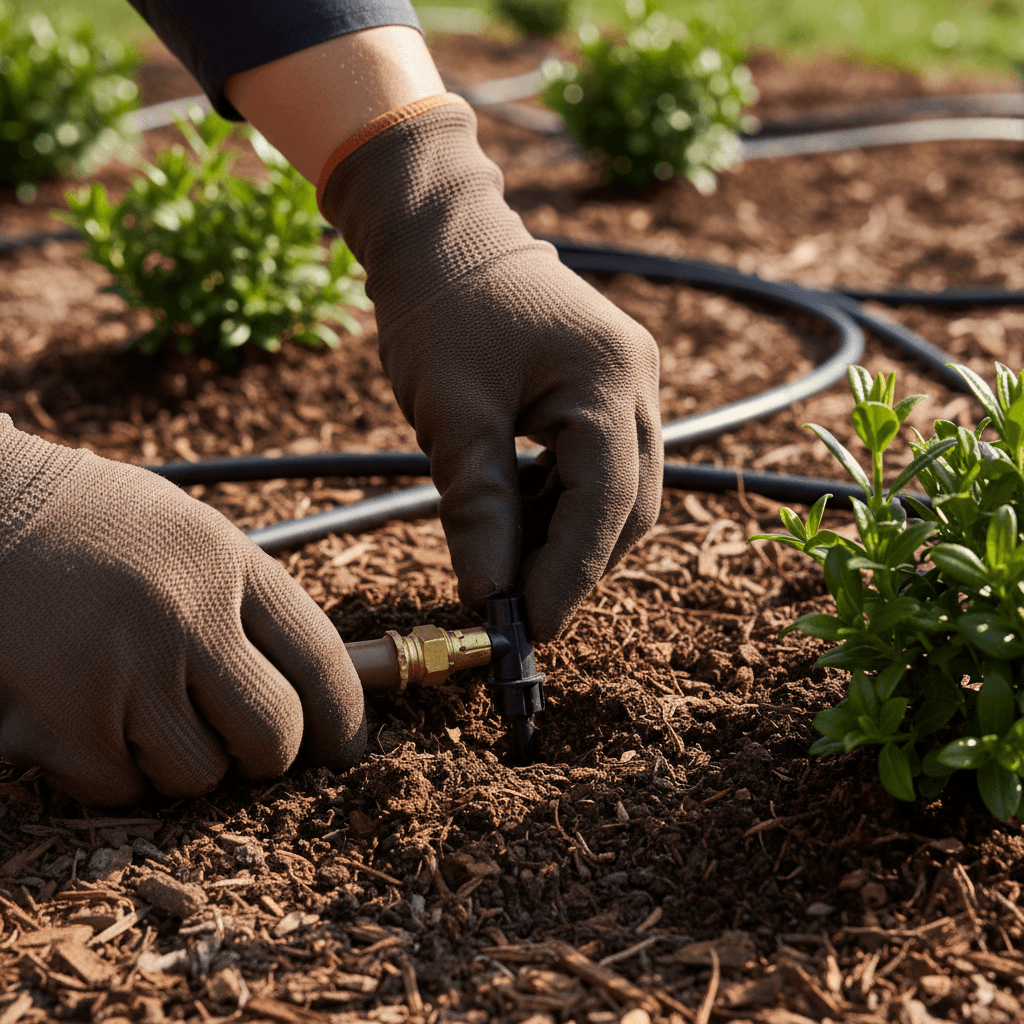
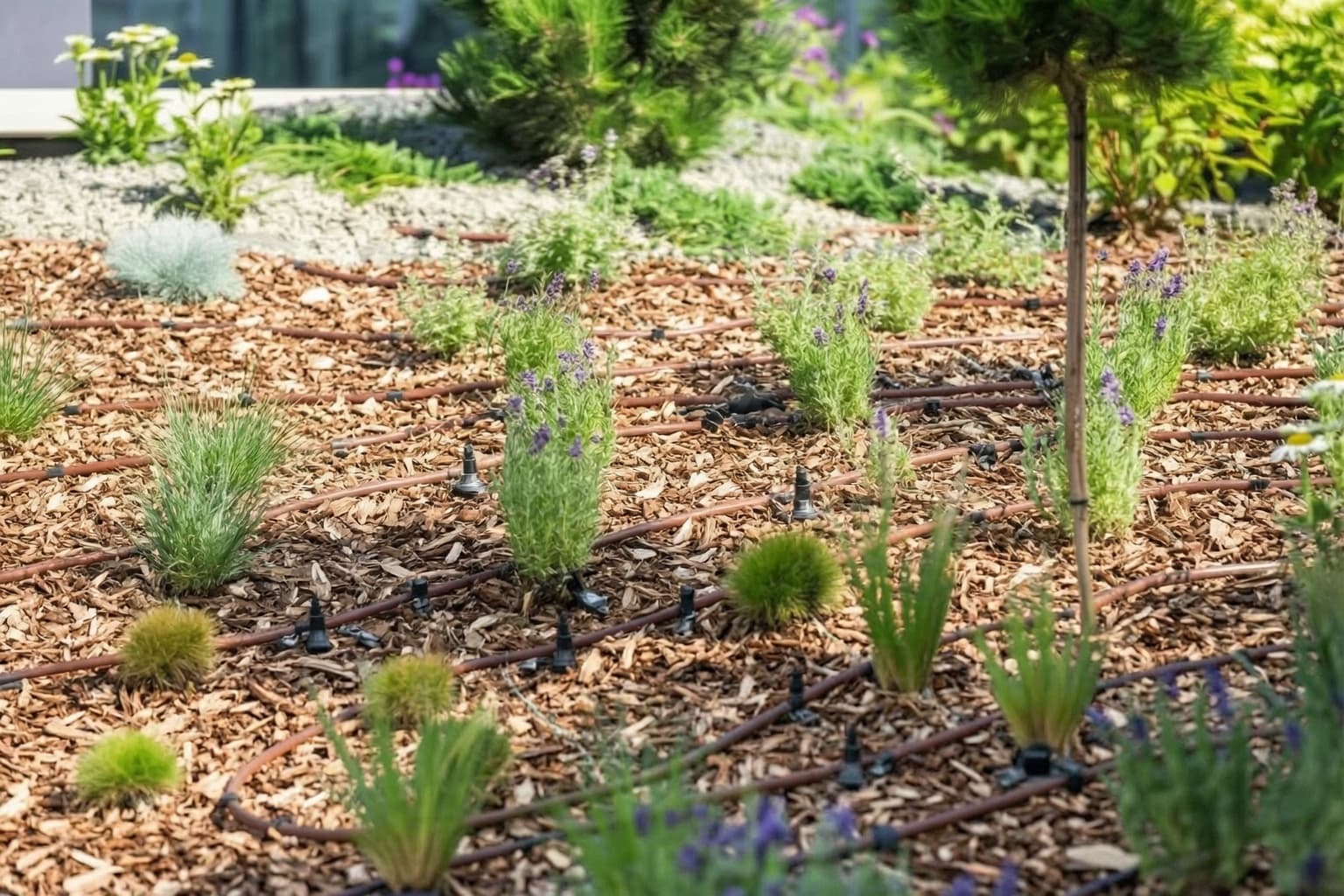
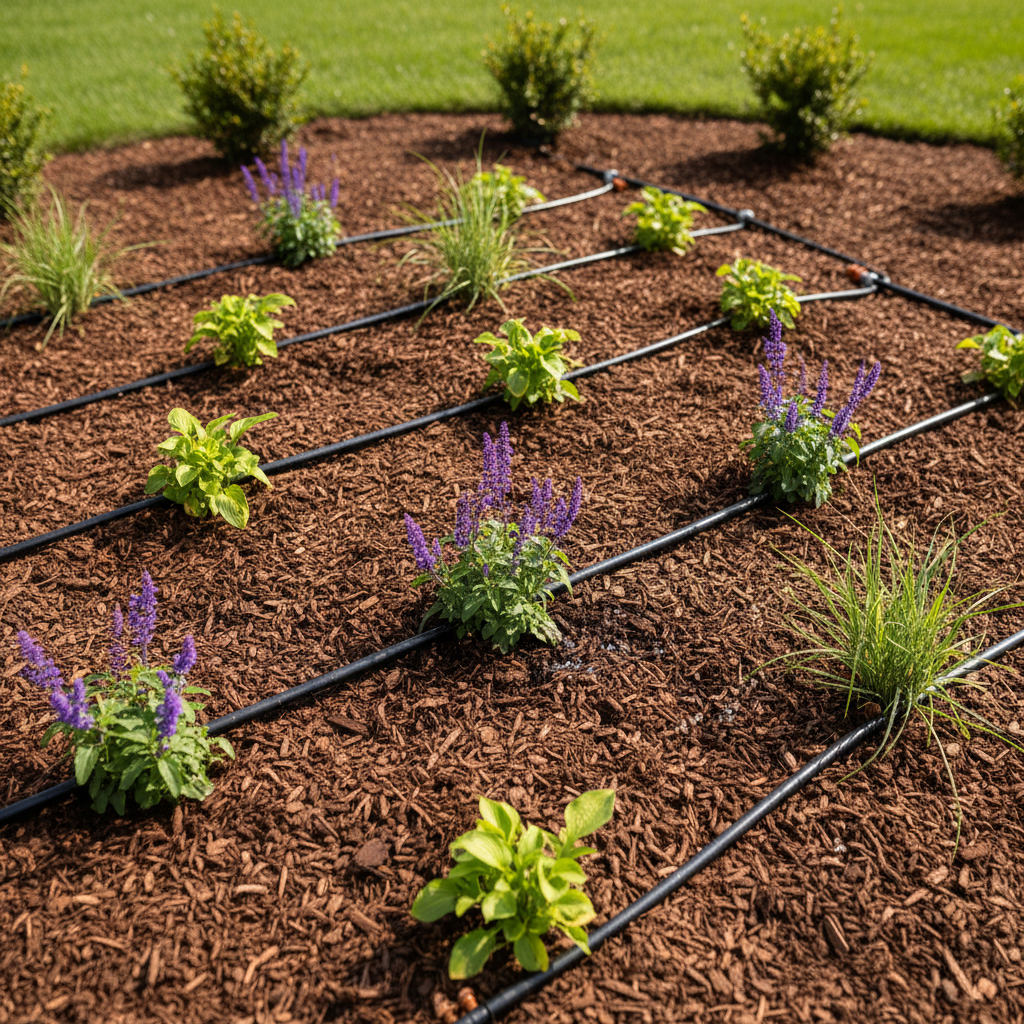
Drip irrigation works on a much smaller scale, measured in gallons per hour (GPH). Instead of throwing water, drip uses emitter tubing with pre-installed orifices, or point source emitters placed at the base of each plant. Water lands directly at the soil line and soaks into the root zone without losing volume to the air.
Understanding these flow rates is essential for permit-level drawings and plant health. A standard spray head might discharge 1.5 GPM, while a single drip emitter might only put out 0.6 GPH. That huge difference in application rate is why a professional design must account for the hardware chosen for each zone.
The Efficiency Factor: Why Drip Irrigation Wins in Modern Landscape Design
The shift toward drip is driven by a measurable reduction in water waste. Research consistently shows drip systems save 30 to 50 percent compared to traditional methods. Delivering water straight to the root zone removes wind drift, which often sprays onto windows and sidewalks, and cuts surface evaporation in the Northeast Florida heat.
Drip also doubles as a natural weed suppressant. Because water is targeted only at the desired plants, the surrounding soil stays dry and starves opportunistic weeds of the moisture they need to germinate. That means less bed maintenance, lower water bills, and better aesthetics all at once.
When Drip Irrigation is Worth the Investment
Some landscape shapes make drip the clear winner. In narrow foundation beds, even a short-radius spray nozzle oversprays onto stucco siding or pavement, causing hard water staining and runoff. Emitter tubing in these tight spaces keeps every drop at the root zone instead.
Densely planted beds also favor drip. When a large shrub's foliage blocks the spray pattern, it leaves smaller plants in its shadow dehydrated. Drip sidesteps this "shadowing" by delivering water at ground level beneath the canopy.
For coastal properties, wind is a constant issue. A spray pattern is easily carried away by sea breezes, causing uneven coverage. Drip is unaffected by air movement. On slopes and raised beds, drip's slow delivery also prevents the rapid saturation that leads to erosion and runoff.
A professional drip layout can handle these complexities, with emitters and spacing matched to the planting and the water source rather than guessed.
The Realities of Drip Maintenance: When It Is Not Worth It
Drip's efficiency comes with a maintenance tradeoff: it is invisible. A broken spray head makes an obvious geyser, but a severed line or clogged emitter stays hidden under the mulch. The first sign of failure is often a dying plant.
St. Augustine's climate also works against drip longevity. Thick organic mulch can degrade the tubing, and a single shovel nick during replanting can compromise an entire zone. Rodents and rabbits sometimes chew through the soft tubing too, causing leaks that go unnoticed for weeks.
For large, open beds with low-density planting, drip can be the wrong call. Installing and maintaining hundreds of feet of emitter tubing can cost more than the water it saves. In these cases a good spray system is the more practical choice: crews can eyeball every head in seconds and confirm it is running correctly.
Can Drip and Sprinklers Run on the Same System?
A common question is whether the two methods can share a zone. The answer is no. A single property can use both, but they must be on separate valves because spray runs in GPM while drip runs in GPH. Mixing them would drown the plants near the spray heads and dehydrate the ones at the emitters.
The hydraulic needs also differ. Spray heads typically run at 40 PSI or higher, while drip operates best at lower pressure, usually 20 to 30 PSI. Separate zones with proper pressure regulation are the only reliable way to run both on one property.
Design Challenges: Sandy Soils and Florida Code Compliance
Northeast Florida's sandy soil poses its own challenge: water moves through it fast. That means drip emitters need closer spacing to keep the root zone evenly moist rather than letting water shoot straight down and away from the roots.
Emitter spacing is the key variable here. Standard 18 inch spacing, common in national designs, often is not enough in fast-draining sand. Tighter spacing and slower flow rates keep moisture where the plants can actually use it.
Accounting for these exact flow rates keeps permit-level drawings in line with the strict requirements of local jurisdictional codes and the St. Johns River Water Management District. Getting spacing right the first time avoids costly revisions and keeps the entire design compliant.
Choosing the Best Solution for Your St. Augustine Property
The best choice depends on your specific plants and how much upkeep you are willing to take on. Beds with lots of tight, varied plantings are natural drip candidates, while big, open beds filled with groundcover often do better with spray.
A professional design removes the guesswork, laying out exact coverage and emitter placement before anything goes in the ground.
Drip lines offer unmatched efficiency for individual shrubs and tight beds, while spray heads shine on large, open areas. Many well-designed Florida landscapes use both, each on its own zone, matched to the plantings and the pressure available.