
An irrigation booster pump becomes necessary when your water source cannot deliver the pressure your system needs to operate correctly. This typically happens when available pressure falls below the minimum operating range of your sprinkler heads or drip emitters, or when elevation gain and long pipe runs eat away the pressure before it reaches the last head. It is not the right fix when the underlying problem is low flow from an undersized meter or service line, or when filters, valves, and leaks are stealing performance.
Weak spray, slow rotors, and brown spots despite regular watering often point to a pressure problem. A booster pump can fix low pressure, but it is not the answer for every flow issue. This guide covers when a pump helps, when it does not, and how to size one correctly.
What an Irrigation Booster Pump Does
A booster pump raises water pressure when the source cannot meet what the sprinkler heads need. Unlike a pump that pulls water from a pond or cistern, a booster pump is installed in-line to add pressure to an existing supply so every zone gets enough force for even coverage.
In St. Augustine, municipal pressure can fluctuate with seasonal demand. When pressure at the meter is unreliable, the whole system suffers. A booster pump added through a professional irrigation design can smooth out those swings.
Signs of Low Water Pressure

Low pressure shows up in specific ways. "Weeping" heads sit low and let water pool at the base instead of spraying. When heads do pop up, the spray comes out as heavy droplets that fall short, leaving green rings near the head and brown patches a few feet out. In St. Augustine's sandy soils, this stress shows fast and can mean costly turf replacement.
This is more than cosmetic. Compromised hydraulics waste water and stress plants. Extending run times does not help; it just over-saturates nearby areas and runs off without reaching the dry spots.
Designers often use the 30/30 rule: if you lose 30 percent of source pressure in the mainlines, or pressure at the head drops below 30 PSI, performance suffers. Professional irrigation design and permit-level drawings catch these bottlenecks before they cause failed inspections or dead turf.
When You Need a Booster Pump
Some cases make a pump necessary. The clearest is static source pressure at the meter below about 35 to 40 PSI. After friction loss through the backflow preventer and valves, there is not enough left to run modern rotors at the 30 to 45 PSI they need.
Elevation is another factor. Every foot of vertical rise costs about 0.433 PSI. On sloped or terraced sites, a pump keeps enough pressure to lift heads at the top. Without it, high zones stay dry while low zones over-water.
On large estates and commercial sites, the flow in gallons per minute (GPM) can exceed what a one-inch service line delivers naturally. When zones need high flow for head-to-head coverage, a pump with a pressure switch holds steady pressure across long runs. Accurate flow data and proper drawings keep the system sized for the site.
When You Might Not Need a Booster Pump
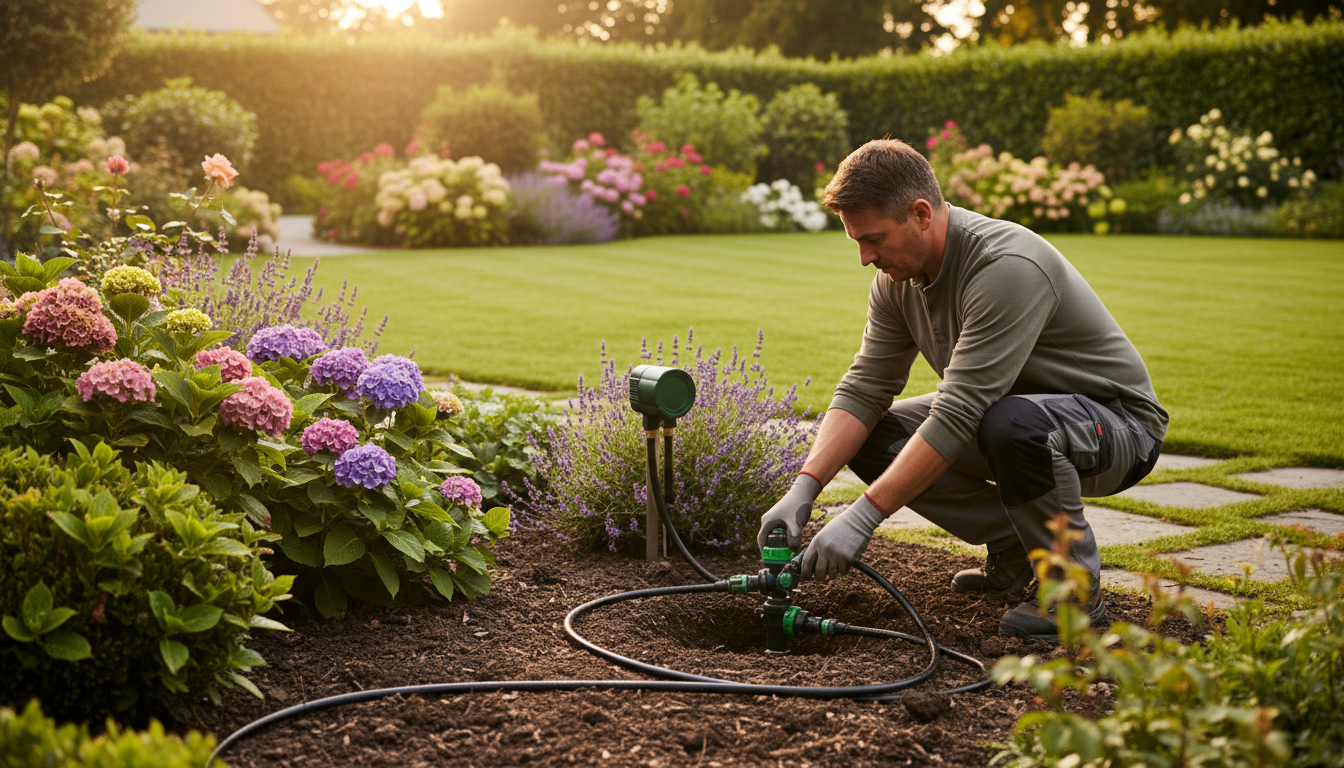
Before adding a pump, check whether the problem is supply or design. In many St. Augustine yards, head pressure is low because of friction loss in the pipes. Adding a pump to a badly laid out system masks the symptom instead of fixing it.
A professional irrigation design often shows the pressure can be recovered with simple adjustments instead of adding a pump:
Resizing mainlines: A larger pipe cuts friction loss. Going from 1 inch to 1.25 or 1.5 inch often recovers enough pressure to skip the pump.
Dividing large zones: If one zone's GPM demand exceeds the service line, pressure drops. Splitting it into two smaller zones lowers the flow per valve.
Retrofitting nozzles: High-efficiency, low-angle nozzles and multi-stream rotators use less GPM than standard rotors. Drip for beds cuts demand further.
Design-first solutions are worth prioritizing. Using permit-level drawings and CAD-based calculations, a designer can model the hydraulics of a property before any trench is dug. That helps owners skip the cost of a pump and its wiring and weatherproof enclosures.
How to Size a Booster Pump Correctly

Sizing starts with total dynamic head (TDH): vertical lift, friction loss through every pipe and fitting, and the pressure needed at the farthest head. An online calculator gives a rough number, but a precise install needs all three.
Match the pump curve to your demand. Each pump has a curve where flow (GPM) and pressure (PSI) meet; choose the duty point where it runs most efficiently. Real flow data from the source ensures the hardware matches the site.
Do not oversize the pump. Too much pressure blows out fittings, wears rotor gears, and causes misting where water evaporates before it lands. Folding these numbers into a professional design and permit-level drawings means the quote is based on verified data, not guesswork.
Installation and Code Requirements
A pump changes how the system connects to the public water supply. Any pump on a potable source risks back-siphonage, so protection of that supply is a code issue, not an option.
Standard installations include several critical components for safety and automation:
Component | Function | Why It Matters |
|---|---|---|
Backflow Preventer | Stops water from siphoning back into the public water supply | Required on any system connected to potable water |
Pump Start Relay | Synchronizes the pump motor with the irrigation controller | Automated, safe operation |
Weatherproof Enclosure | Protects hardware from Florida's sun, rain, and salt | Long-term reliability |
These changes also trigger permits. The Florida Building Code, Plumbing, Appendix F requires a permit before constructing, altering, modifying, or repairing any irrigation system, and it calls for permit-level drawings on commercial, municipal, and multi-family projects. For single-family homes, drawings must still show the water source, meter, point of connection, backflow prevention, and, when a pump is used, the pump station size, location, and design pressure and flow rate per zone.
Choosing between a pump and a pipe fix can save real time and money. A booster pump is not the answer to every pressure problem. If pressure problems persist, a professional irrigation designer can diagnose the true cause.